
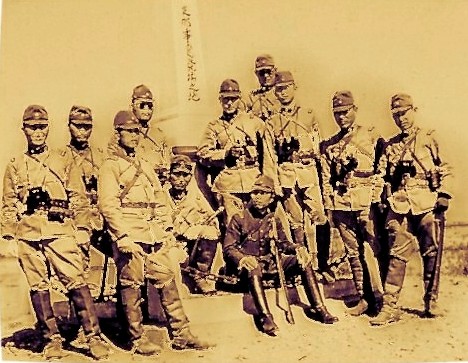
“Military Comfort Stations” and “Military Comfort Women” as Recorded in Official Imperial Army Daily Records

By:

February 26, 2026

“Military Comfort Stations” and “Military Comfort Women” as Recorded in Official Imperial Army Daily Records

Volume 24

Abstract: This research reconsiders the true nature of Japanese military comfort stations and comfort women. To summarize the discussion in this paper, comfort stations were military facilities, and comfort women were the third unit of the Japanese military, after soldiers and direct civilian employees of the Army and Navy. The Japanese military recognized the comfort stations as an essential element of military operations, and institutionalized and formalized their comfort stations by incorporating them into innumerable detailed regulations.

Keywords: Comfort Stations, Comfort Women, War Diaries, Camp Requirements Order, Army Internal Affairs Manual, Garirson Duty Order, Field Canteen Regulations

Read the full article here.

Share with a colleague:

Volume 24

About the author:

Jongmoon Ha currently serves as a professor in the Department of Japanese Studies at Hanshin University in Korea. His specialty is modern Japanese history, and his recent interests include wartime labor policies, the Emperor system, the Japanese military’s “comfort women,” colonialism, and Asianism. He served as a prosecutor for the Korean side at the Women’s International War Crimes Tribunal on Japan’s Military Sexual Slavery, held in Tokyo, Japan in December 2000. In January 2023, he published The Japanese Military Comfort Stations through the Japanese Army’s War Diaries in Korea and is currently preparing a Japanese translation.

Asia-Pacific Journal: Japan Focus is a peer-reviewed publication, providing critical analysis of the forces shaping the Asia-Pacific and the world.

    About the author:

    Jongmoon Ha currently serves as a professor in the Department of Japanese Studies at Hanshin University in Korea. His specialty is modern Japanese history, and his recent interests include wartime labor policies, the Emperor system, the Japanese military’s “comfort women,” colonialism, and Asianism. He served as a prosecutor for the Korean side at the Women’s International War Crimes Tribunal on Japan’s Military Sexual Slavery, held in Tokyo, Japan in December 2000. In January 2023, he published The Japanese Military Comfort Stations through the Japanese Army’s War Diaries in Korea and is currently preparing a Japanese translation.