

|
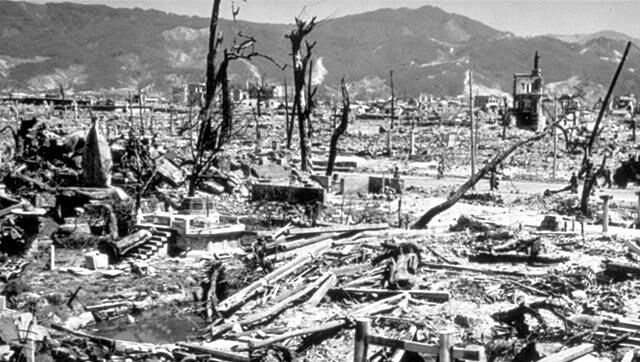
Hiroshima after the atomic bomb |

| 炎ノ街 Honō No Machi |
City in Flames |
| 中村温 | Nakamura On |
| 青白いキラメキト黑イ太陽ト Aojiroi kirameki to kuroi taiyō to |
Under a pale blue glow, the black sun, |
| 死ンダ向日葵ノ花ト崩レタ屋根ノ下デ shinda himawari no hana no kuzerta yane no shita de |
dead sunflowers, and a collapsed roof, |
| 人人ハ声モナク顔ヲアゲタ hito bito wa koe mo naku kao o ageta |
people lifted their faces voicelessly: |
| ソノ時見交サレタ血ミドロノ眼 sono toki mikawasareta chi midoro no me |
bloody eyes that exchanged looks then |
| ズルムケノ皮膚 zurumuke no hifu |
loosely peeling skin |
| 茄子ノ様ニフクレタ唇 nasu no yō ni fukureta kuchibiru |
lips swollen like eggplants |
| 硝子の刺サッタ頭 garasu no sasatta atama |
heads impaled with shards of glass— |
| 《コレガ人間ノ顔デアルワケガアロウカ》 “kore ga ningen no kao de aru wake ga arōka” |
“how can this be a human face” |
| 誰モガ他人ノ顔ヲ見テソウ思ッタ daremo ga tanin no kao o mite sou omotta |
everybody thought at the sight of another |
| ダガソ思ッタ人ノ顔モソウナッテイタ daga sou omotta hito no kao mo sou natteita |
yet each who so thought had the same face. |
| 炎ガヤガテ街ヲツツンデイク Honō ga yagate machi o tsutsundeiku |
Flame soon wrapped the city |
| 或ル家デハ母親ト七歳ノ女ノ子ダケガ居タ aru ie de wa hahaoya to nanasai no onnanoko dake ga ita |
at one house there were only a mother and a seven-year-old girl |
| 屋根ノ下敷キデ母親ハ動ケナカッタ yane no shita jiki de hahaoya wa ugokenakatta |
crushed under the roof; the mother could not move |
| 女ノ子ダケガ助カッタ onnanoko dakega tasukatta |
the girl alone survived. |
| 女ノ子ガ柱ヲ動カソウトシテ居タ時 onnanoko ga hashira wa ugokasō to shite ita toki |
while the girl was trying to move a pillar |
| 炎ハソコニモヤッテ来タ honō wa soko ni mo yatte kita |
the flames came there too. |
| 《オ前ダケ逃ゲナサイ》 “omae dake nigenasai” |
“Go on without me,” |
| 母親ハ自由ニナル片腕デ hahaoya wa jiyū ni naru kata ude de |
the mother, with her free arm, |
| ソノ子ヲ押シヤッタ sono ko o oshiyatta |
pushed the child away. |
| 恐怖ノ叫ビ声サエモ出ズ kyōfu no sakebi goe sae mo dezu |
Without even uttering a cry of horror, |
| 西カラモ東カラモ nishi kara mo higashi kara mo |
toward the place without flames |
| ズルムケノ裸形ノ zurumuke no hadaka no |
from the west and from the east |
| 男カ女カモワカラヌ otoko ka onna ka mo wakaranu |
naked figures their skin loosely peeling: |
| 幽霊ノ行列ガ続イタ yūrei no gyōretsu ga tsuzuita |
you couldn’t tell men from women, |
| ソノ様ナ中デ sono yō na naka de |
a procession of ghosts continued; in the middle of all this, |
| 突然 totsuzen |
suddenly |
| 行列ノ中ノ老婆ガ立チドマリ gyōretsu no naka no rōba ga tachidomari |
an old woman in the procession stopped, |
| ホドケタ帯ノ様ナモノヲタグッテイタ hodoketa obi no yō na mono o tagetteita |
pulling in something like a sash that was coming off |
| 炎ハモウソコ迄キテイルノニ! honō wa mō soko made kiteirunoni! |
when the flames had already come so close! |
| 見カネタ一人が言ッタ mikaneta hitori ga itta |
Someone, unable to take it any longer, said, |
| 《オ婆サン ソンナモノハ捨テテ早ク行キマショウ》 “obāsan sonna mono wa sutete hayaku iki mashou” |
“Come, throw that away, let’s hurry.” |
| スルト老婆ハ答エタ suruto rōba wa kotaeta |
then she answered, |
| 《コレハ私の腸ナノデス》 “kore was watashi no chō nano desu” |
“These are my intestines.” |
| 声なきものへ Koe naki mono e |
To The Voiceless |
| 山田数子 | Yamada Kazuko |
| なんぼうにも Nanbō ni mo |
No matter what you say |
| むごいよ mugoi yo |
it is cruel |
| みんなにもうわすれられて minna ni mō wasurarete |
already forgotten by everyone |
| 埋もれてしまった umorete shimatta |
and buried away |
| ほとけたら hotoketara |
are the buddhas |
| ほったらかしの hottarakashi no |
left alone |
| ほとけたち hotoketachi |
are the buddhas |
| なんぼうにも nanbō ni mo |
no matter what you say |
| むごいよ mugoi yo |
it is cruel |
| 月のかたぶくばんには tsuki no katabuku ban ni wa |
on a night when the moon inclines |
| ゆうれいになってやってこい yūrei ni natte yattekoi |
come over as ghosts |
| 母さんとはなそうよ kāsan to hanasou yo |
talk with your mom |
| let’s talk, with our backs turned | |
| 失なったものに Ushinatta mono ni |
To the Lost |
| 山田数子 | Yamada Kazuko |
| びわの花がさいたら Biwa no hana ga saitara |
When loquats bloom |
| ももやまのももがさいたら momoyama no momo ga saitara |
when peach blossoms in the peach mountain bloom |
| はらんきょうが小指の先になったら harankyō ga koyubi no saki ni nattara |
when almonds are as big as the tips of the little finger |
| おまえたち omaetachi |
my boys |
| もどってきてくれ modotte kite kure |
please come. |
| The following two poems were composed in 1952 by primary school students. | |
| げんしばくだん Genshi bakudan |
The Atomic Bomb |
| 坂本はつみ | Sakamoto Hatsumi |
| げんしばくだんがおちると Genshi bakudan ga ochiru to |
When the atomic bomb drops |
| ひるがよるになって hiru ga yoru ni natte |
day turns into night |
| 人はおばけになる hito wa obake ni naru |
people turn into ghosts. |
| 無題 Mudai |
Untitled |
| 田尾絹江 | Tao Kinue |
| ばくだんがおちたあと bakudan ga ochita ato |
After the bomb dropped |
| おかあちゃんが okaachan ga |
mom says |
| だいじにのけといた米を炊きながら daiji ni noketoita kome o takinagara |
boiling rice she carefully saved |
| せんそうをして sensō o shite |
“what’s so fun about |
| なにがおもしろいんだろう nani ga omoshiroindarō |
making war” |
| といって、 to itte, |
she said |
| たかしゃ たかしゃ Takashi-a Takashi-a |
“Takashi my son, Takashi my son |
| まめでかえってくれと mame de kaette kure to |
please come back healthy” |
| いってなきながら itte naki nagara |
she cries |
| おむすびをつくる。 omusubi o tsukuru |
making rice balls. |
| 大臣のうた Daijin no uta |
Song of the Prime Minister |
| 岡本潤 | Okamoto Jun |
| 死の灰がどんなに散ら貼ろうと Shi no hai ga donna ni chirabarō to |
However much deadly ashes scatter |
| 汚れた雨がどんなに降ろうと kegareta ame ga donna ni furō to |
However much polluted rain falls |
| 学者がなんといおうと gakusha ga nan to iō to |
whatever scholars say |
| 人民どもがどんなにさわごうと jinmin domo ga donna ni sawagō to |
whatever hubbub the populace makes |
| 大臣はアチラむき daijin wa achira muki |
the minister’s face turns “over there” and greets |
| —どうぞ どうぞ 御遠慮なく —dōzo dōzo goenryō naku |
—please, please, anything you like. |
| ベーター線 bētā sen |
Beta rays |
| ガンマー線 ganmā sen |
gamma rays |
| もやもやの放射能雲が列島をおおい moya moya no hōshanō gumo ga rettō o ooi |
nebulous radioactive clouds over the archipelago |
| 魚類も家畜も野菜も草木も gyorui mo kachiku mo yasai mo kusaki mo |
fish cattle vegetable trees and grass |
| 鉛いろにどろんとなり namari iro ni doron to nari |
all turn into a leaden soggy mass |
| 老若男女が海坊主に化そうと rōnyaku danjo ga umi bōzu ni kasō to |
young and old, men and women turn into sea monsters, even then |
| 大臣さんはアチラまかせ daijin san wa achira makase |
the minister leaves it up to those “over there” |
| —どうぞ どうぞ 御遠慮なく dōzo dōzo goenryō naku |
—please, please, anything you like. |
| もはや女も男も mohaya onna mo otoko mo |
Now no woman no man |
| 人間の形をしたものはいない ningen no katachi o shita mono wa inai |
has a human shape |
| 列島はカキ殻の破片 rettō wa kakigara no hahen |
the islands are shattered fragments of oyster shells |
| 方角もなく骨灰のまう hōgaku mo naku kokkai no mau |
an eroded desert |
| 風化沙漠 fūka sabaku |
where bones and ashes dance directionless |
| さまよう大臣の亡霊が samayō daijin no bōrei ga |
the wandering ghost of the minister |
| どこかでオケラのように啼いている dokoka de okera no yō ni naiteiru |
is singing somewhere like a marsh cricket |
| —どうぞ どうぞ 御遠慮なく —dōzo dōzo goenryō naku |
—please, please, anything you like. |
| Tanka from Hiroshima | |
| 無造作に殺されし人を無造作にかき集めて榾火にふすかも Muzōsa ni korosareshi hito o muzōsa ni kaki atsumete hotabi ni fusukamo |
Those killed without ceremony we gather without ceremony and place in the bonfire |
| 佐々木豊 | Sasaki Yutaka |
| 少年の屍と見れば顔よせて吾子ならじかと覗きては行く Shōnen no kabane to mireba kao yosete ako narajika to nozokite wa yuku |
Each time I see a boy’s body I bring my face close to see if he’s my boy as I travel in search |
| 益田美佐子 | Masuda Misako |
| 声涼しくアリランの唄歌いたる朝鮮乙女間なく死にたり Koe suzushiku Ariran no uta utaitaru chosen otome manaku shinitari |
Voice serene she sang the song of Arirang the Korean maiden was soon dead |
| 神田満寿 | Kanda Masu |
| * “Arirang” is a popular Korean folksong. | |
| 手を合わせ水欲るともにやらざりし我が終生悔恨となる Te o awase mizu horu tomo ni yarazarishi waga shūsei kaikon to naru |
Palms joined my friend asked for water that I gave none has become my lifelong regret |
| Kono Chizuko | |
| でて虫のごとく地を這い水求む生きし地獄は児らに告げ得ず Detemushi no gotoku chi o hai mizu motomu ikishi jigoku wa kora ni tsuge ezu |
Snail-like I crawled on the ground and sought water about that living hell I cannot tell my children |
| Kamamoto Misaki | |
|
Ruins of Urakami Cathedral, Nagasaki, Wikicommons. |
|
| Tanka from Nagasaki | |
| 茫漠の瓦礫の中に天主堂に一夜明かしぬ神をあげつらひ Bōbaku no gareki no naka ni tenshudō ni ichiya akashinu kami o agetsurahi |
In the cathedral in the ruins of boundless expanse I stayed one night criticizing God |
| Suga Takashi | |
| 白血球すくなきわれを眩しませ若葉木さわぐ風に揉まれて Hakkekkyū suku naki ware o mabushimase wakaba ki sawagu kaze ni momarete |
White blood cell count is low dazzling my eyes young leaves rustle tossed in the wind |
| Mihara Hanako | |
| 原爆の跡かたもなき彦山を染めて早々陽は昇るなり Genabaku no atokata mo naki Hikosan o somete sōsō yō wa noborunari |
No trace of the atomic bomb dyeing Mount Hiko morning after morning the sun rises |
| Matsumoto Sueko | |
| 爆心地にちかく埃をあびて咲く地蔵の前の赤き曼珠沙華 Genbakuchi ni chikaku hokori o abite saku jizō no mae no akaki manjushage |
Near the hypocenter blooms in dust in front of Jizō a red heavenflower |
| Moriuchi Masa | |
| Haiku from Hiroshima | |
| 一口のトマトに笑み少年早や死骸 Hitokuchi no tomato ni emi shōnen haya mukuro |
A smile at a bite of tomato the boy is already a corpse |
| 屍体裏返す力あり母探す少女に Shitai uragaesu chikara ari haha sagasu shōjo ni |
Strength to turn a body in a girl who looks for her mother |
| 柴田杜代 | Shibata Moriyo |
| ひろしまは光げのないしろい白い街 Hiroshima wa hikarige no nai shiroi shiroi machi |
Hiroshima is without light a white white city |
| Shoji Tokie | |
| 孤児の掌の蛍は強く明滅 Koji no tenohira no hotaru wa tsuyoku meimetsu |
Firefly in an orphan’s hands powerfully glimmer on and off |
| Taruma Yoshikazu | |
| 平和祭かヽはりなしと靴磨く Heiwa matsuri ka harinashi to kutsumigaku |
Peace festival none of my business I shoeshine |
| Numata Toshiyuki | |
| 神はっと眼をそむけたり八時十五分 Kami hatto me o somuketari hachiji jūgo fun |
God suddenly averted His eyes at 8:15 |
| Fujikawa Genshi | |
| Haiku from Nagasaki | |
| 浜木綿やこの地に多きかくれ耶蘇 Hamayuu ya kono chi ni ooki kakure yaso |
Sand flowers on this land were many secret Christians |
| Takenaka Jakutoh | |
| 掌の蟻をつまみ被曝の地にもどす Tenohira no ari o tsumami hibaku no chi ni modosu |
Picking up the ant on my palm I put it back on the bombed land |
| Uesugi Ryusuke | |


These poems and their translations were originally published in The Atomic Bomb: Voices from Hiroshima and Nagasaki, edited by Kyoko and Mark Selden, Armonk, pages 117-155. NY: M.E. Sharpe, 1989.